
Less Tech Noise. More Strategic Insights
Join 5000+ Tech leaders & CISOs receiving our deep-dive insights.
November Tech Insights Reshaping Enterprise Priorities for 2026


- Cloud & AI: Infrastructure Expands, Intelligent Platforms Emerge
- Black Friday 2025: AI-Powered Scams & E-Commerce Threats Surge
- Cybersecurity: Strategic Threats Escalate, Nation-State Espionage Resurfaces
- E-Commerce & Cloud Reliability: Black Friday Traffic Pushes Infrastructure to the Edge
- Industry Direction: AI Scales, Edge Evolves, and Cloud Shapes 2026 Strategy
- 2026 Predictions: What CIOs Must Prepare For
- FAQs
“Warnings | Wake-up calls | Preview of 2026’s tech battlefield.”
A series of shifts across cloud, AI, and cybersecurity has reset what “prepared” needs to look like going into 2026. Record AI-driven scams, cloud misuse, and Black Friday attacks exposed how unprepared many teams still are.
A single outage, breach, or misconfigured service can now disrupt entire revenue cycles — especially during seasonal traffic peaks. Businesses are facing a new reality: AI is scaling faster than governance, and attacks are scaling faster than defenses.
At Infosprint Technologies, we analyzed the month’s most critical events into a practical breakdown of what changed, why it matters, and how it shapes your 2026 business strategy.
1.Cloud & AI: Infrastructure Expands, Intelligent Platforms Emerge
a) AWS Commits $50 Billion to AI & HPC Infrastructure
AWS’s announcement of a $50B investment into AI and supercomputing capacity marks one of the most significant infrastructure expansions in recent years. The focus: accelerating AI workloads, strengthening HPC environments, and supporting advanced governmental and enterprise systems.
Why it matters:
- AI workloads are becoming infrastructure-heavy; compute capacity will dictate the pace of innovation.
- Enterprises using AWS will see long-term improvements in performance, availability, and scalability of model deployment.
- This investment signals a shift: hyperscaler growth is now directly aligned with AI adoption cycles.
Business impact insight:
- Accelerated AI Adoption: Clients adopting LLM-driven automation, analytics, or edge frameworks will experience faster deployment cycles and improved performance benchmarks.
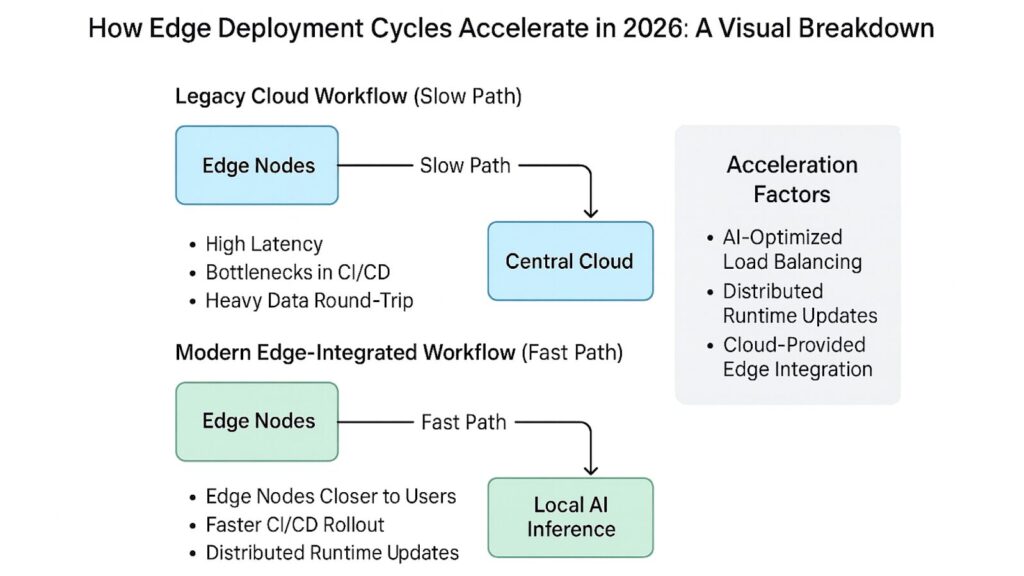
As edge adoption increases, businesses can release, test, and roll out new features faster — reducing deployment friction for both cloud-native and AI-driven workloads.
- Cloud Cost & Architecture Review: Increased HPC and GPU availability make it the right time to reassess infrastructure design to avoid overprovisioning and improve cost/performance ratios.
- Compliance-Ready AI Solutions: With AWS strengthening its regulated-sector offerings, enterprises can build AI workflows that meet stricter data residency and compliance mandates — a key priority entering 2026.
b) Google Cloud Rolls Out Gemini Enterprise
Google Cloud introduced Gemini Enterprise, a unified platform built to operationalize intelligent agents, automate workflows, and integrate generative AI into enterprise systems.
Why it matters:
- Agentic AI is moving from pilots to production environments.
- Enterprise teams can now use multimodal models at scale while following governance and compliance guardrails.
- Many workflows that once required custom engineering can now be automated with native cloud-AI orchestration.
Business impact insight:
- Workflow Modernization: Clients with fragmented automation systems can streamline operations using agent-driven workflows, reducing operational overhead.
- Faster AI Integration: Gemini Enterprise simplifies connecting LLMs with cloud storage, APIs, and enterprise data, shortening time-to-value for AI initiatives.
- More substantial Competitive Leverage: Early adopters gain an advantage in customer experience, personalization, and predictive analytics — critical as markets move toward real-time intelligence.
Infosprint helps organizations modernize cloud workloads with scalable, secure architectures
2.Black Friday 2025: AI-Powered Scams & E-Commerce Threats Surge
This Black Friday brought more than high traffic — it triggered a wave of AI-powered fraud campaigns. Attackers deployed automated phishing flows, deepfake customer support chats, and sophisticated fake retail websites.
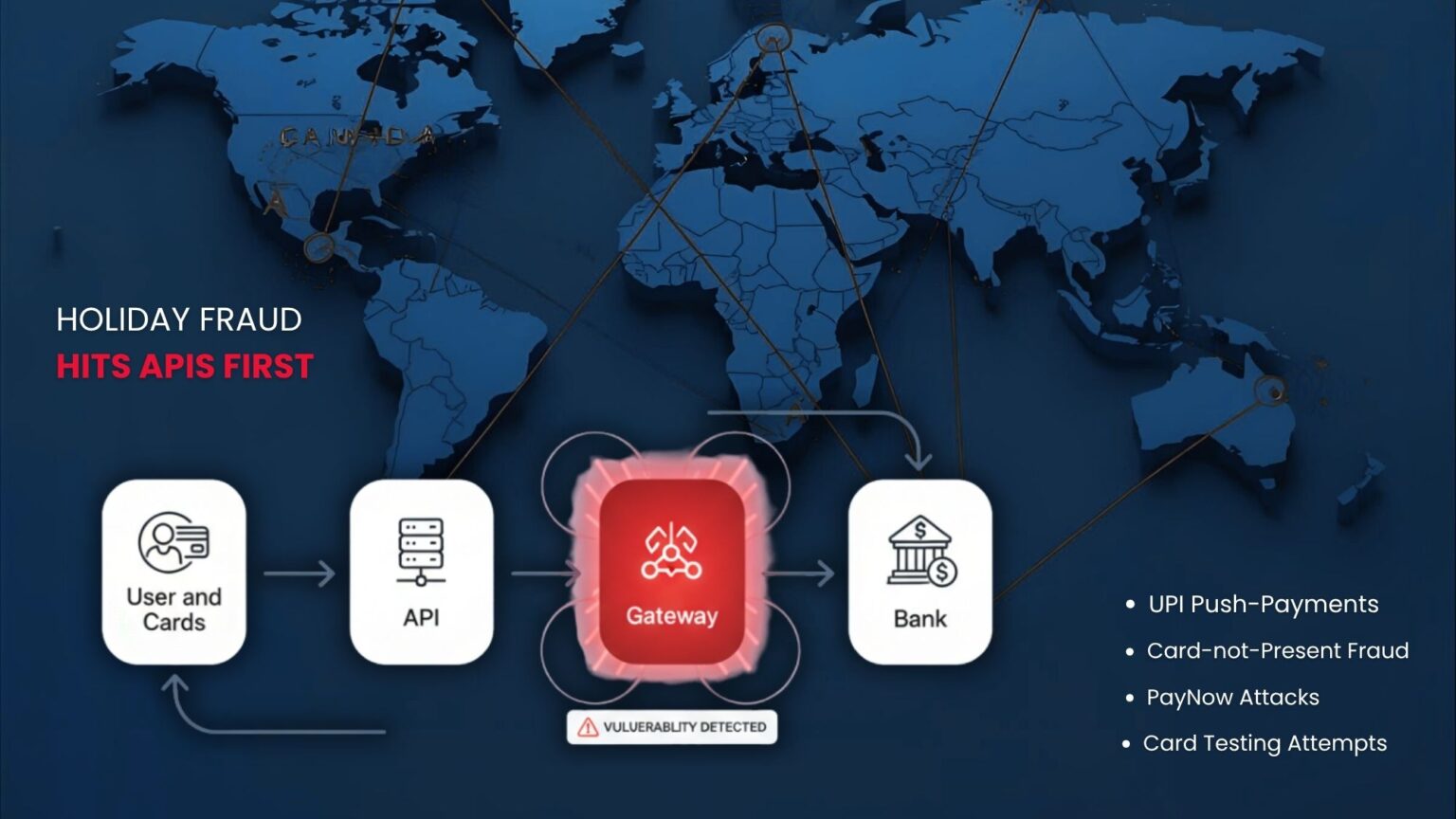
Recent analysis shows attack volumes spiked dramatically across e-commerce platforms, especially those with API-driven architectures.Learn how API and gateway vulnerabilities create risk.
Key risk highlights:
- AI-generated phishing is indistinguishable from legitimate brand messaging.
- Fake checkout flows are becoming harder for consumers to detect.
- Bots can now automate fraud attempts across thousands of targets per minute.
Why it matters:
High-traffic periods create perfect conditions for large-scale exploitation. For online retailers, even a minor breach during peak season can directly impact revenue and brand trust. See proven ways to stabilize your e-commerce traffic during peak season
Business impact insight:
- Stronger Fraud & Identity Monitoring: Businesses should upgrade authentication and anomaly-detection layers, especially around login, checkout, and payment flows.
- Incident Response Modernization: AI-generated attacks require updated playbooks with faster detection, automated triage, and cross-team coordination.
- Brand Protection Measures: With AI enabling near-perfect spoofing, enterprises need advisory support on domain protection, DMARC enforcement, and customer-facing security guidance.
3.Cybersecurity: Strategic Threats Escalate, Nation-State Espionage Resurfaces
a) APT31 Conducts Covert, Cloud-Based Espionage
A major intelligence revelation this month uncovered long-term, stealthy intrusions by APT31, a China-linked threat group targeting Russian IT infrastructure.
The attackers blended cloud resources, malware loaders, and supply-chain vectors to avoid detection for extended periods.
Why it matters:
- Cloud environments are increasingly part of the attack surface in state-sponsored operations.
- Supply-chain vulnerabilities are now the preferred entry point for highly sophisticated actors.
- Traditional perimeter defense strategies are insufficient for modern threat landscapes.
Business impact insight:
- Identity & Access Audits Are Now Mandatory: Misconfigured tokens or excessive permissions create high-value entry points for stealth attacks.
- Cloud Forensics & Monitoring Upgrades: Teams should implement continuous behavioral monitoring, not just perimeter-based security.
- Vendor Risk Elevation: As attackers piggyback on cloud providers, businesses must assess cloud vendor dependencies and implement zero-trust access controls.Access the Vendor Risk Management Guide to safeguard from attackers.
4.E-Commerce & Cloud Reliability: Black Friday Traffic Pushes Infrastructure to the Edge
E-commerce platforms experienced heavy strain during November’s shopping surge. Research showed a significant spike in attacks targeting retail APIs, payment gateways, and inventory engines.
Pressure points observed:
- API overloading and rate-limit manipulation
- Checkout flow abuse via automation
- Sudden latency spikes in cloud-hosted microservices
- Increased credential-stuffing attempts targeting loyalty programs
Why it matters:
Black Friday is increasingly an infrastructure test as much as a sales driver. Cloud systems must auto-scale seamlessly, and security must adapt in real time.
Business impact insight:
- Traffic Spike Resilience: Enterprises should reevaluate their application firewalls, bot mitigation layers, and checkout security.
- PII Governance Strengthening: With personal data repeatedly targeted, stronger data encryption and tokenization strategies are essential.
- Load Testing + Security Drills: Infosprint recommends combined performance + security testing simulations before major sales events.
5.Industry Direction: AI Scales, Edge Evolves, and Cloud Shapes 2026 Strategy
Edge Computing Momentum Continues
This month’s industry reports highlighted the rapid rise of edge computing, especially in manufacturing, healthcare, and retail automation. Explore more emerging edge technologies here.
Why it matters:
- Real-time AI requires low latency, pushing compute closer to devices and users.
- Edge-cloud architectures will define the next generation of automation, IoT, and intelligent operations.
- Businesses that rely purely on centralized cloud models may face performance bottlenecks.
AI Trends for 2026: From Hype to Applied Value
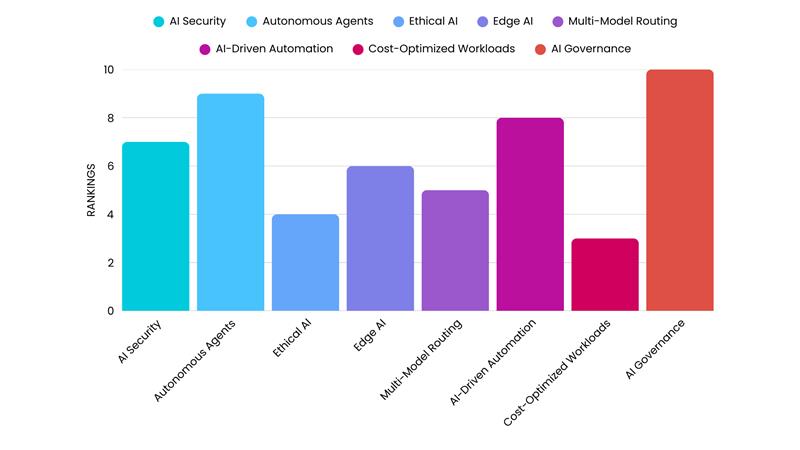
Key analyses indicated a shift in AI adoption patterns: organizations are now prioritizing scalable, practical, and entirely governed AI deployments rather than relying solely on experimentation.
Why it matters:
- Boards now expect measurable ROI, not exploratory pilots.
- AI must be tied to workflow automation, customer experience, and cost optimization.
- Laws that take effect in 2026 will need structured governance and auditability.
| Treat 2026 as the year of AI-governed infrastructure, not AI experimentation.
2026 Predictions: What CIOs Must Prepare For
Agentic AI, rising cloud bills, identity-focused supply-chain attacks, and board-level multi-cloud resilience will shape the 2026 agenda.
- Agentic AI replaces traditional automation
It will replace legacy automation by autonomously handling workflows, decisions, integrations, and multi-system operations.
- Cloud bills rise without modern FinOps
AI workloads and GPU demand will push enterprise cloud costs up significantly without mature FinOps governance.
- Supply-chain attacks target cloud identities
Attackers will prioritize compromising cloud identities, CI/CD secrets, and integrations over traditional endpoint-focused intrusions.
- Multi-cloud DR becomes a board demand
Resilience pressures will make multi-cloud disaster recovery a board-level requirement for continuity and compliance.
Speak to our AI consultants to build a safe and scalable AI-ready business strategy 2026.
Frequently Asked Questions
Infosprint strengthens your tech stack with cloud modernization, AI-led automation, and enterprise-grade cybersecurity frameworks designed to reduce risk and accelerate digital transformation.
The November attacks revealed rising vulnerabilities in retail APIs, identity systems, and cloud supply chains—forcing organizations to tighten controls, improve monitoring, and adopt zero-trust security practices.
Autonomous agents streamline repetitive tasks, accelerate decision-making, and reduce operational overhead, helping teams scale faster while maintaining accuracy and compliance.
Black Friday traffic created a perfect environment for attackers, driving spikes in phishing, API abuse, and payment-gateway fraud as cybercriminals targeted high-volume retail platforms.
Edge computing enables faster, distributed rollouts by reducing cloud round-trip latency and shifting compute closer to users—dramatically accelerating deployment cycles.
Related Blogs
Holiday Payment Fraud: Weak Links in APIs & Gateways

Black Friday 2025 – 5 Proven Strategies to Gain Control of Traffic Spikes