

In-App Subscriptions in 2025: How to Fight Back Against Hidden Fees and Data Breaches
Less Tech Noise. More Strategic Insights
Join 5000+ Tech leaders & CISOs receiving our deep-dive insights.


“Impatience has become the norm.”
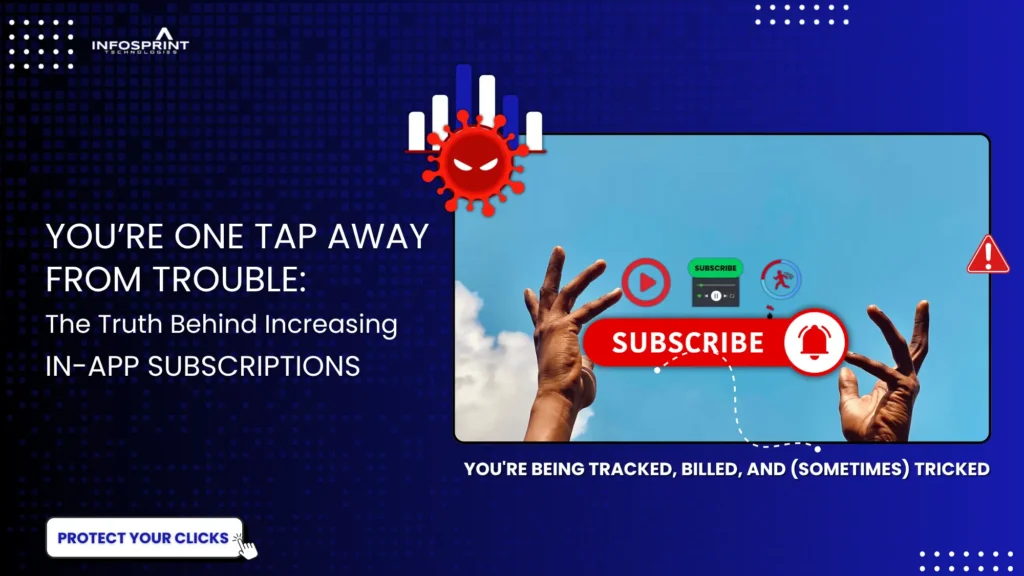
We want it now—and we want it seamless. That’s the age we live in. But that “one-click” subscription that feels so convenient today raises an important question: is it truly convenient, or could it be a gateway to fraud and privacy risks?
From fitness trackers and food delivery to gaming and education, businesses are rapidly moving away from one-time payments in favor of recurring revenue models. While this shift offers users unmatched convenience and ongoing value, it also introduces a growing wave of security and privacy concerns that users, developers, and regulators can no longer ignore.
Mobile applications have now become one of the fastest-growing digital attack surfaces. Recent industry studies indicate that over 60% of organizations have experienced a mobile security incident in the past year, highlighting the increasing risks associated with app ecosystems and subscription-based services.
At Infosprint Technologies, a trusted name in cybersecurity, we understand the delicate balance between digital convenience and data protection. So, we unpack the evolving challenges of in-app subscriptions and how users and businesses can navigate them securely.

Why are in-app subscriptions so popular?
We live in a world where we want instant gratification. Impatience has become the norm in this digital age, leading to the rise of in-app subscriptions. These subscriptions provide easy access to a wide range of services, from learning and streaming movies to fitness programs and reading newspapers, all with just a single click.
Businesses have also benefited from this trend, transitioning from one-time payments to subscription models, which have resulted in significant revenue growth.
1. Convenience for Users
Subscriptions simplify purchasing in the app, allowing users to access premium services easily without leaving the platform. Integration with Google Pay and Apple Pay enhances the seamless experience and adds additional security layers through tokenized payments.
2. Developers’ Predictable Revenue
For developers, subscriptions provide steady and predictable income compared to one-time purchases. This stability enables businesses to invest confidently in product development, security improvements, and customer support.
In our case study on scaling a streaming platform to handle massive traffic spikes, we explore how businesses can maintain performance as subscriber growth accelerates.
3. Continuous Product Involvement
Developers should enhance their products through subscription models by offering valuable content, better UX, and regular updates.
4. Personalization and Loyalty
Subscriptions frequently include personalization options, use data, or tiered access, which boosts user stickiness and brand loyalty.
However, while these advantages make subscriptions appealing, they also introduce new risks that cannot be ignored.
The Flip Side: Security and Privacy Risks
While in-app subscriptions provide unmatched convenience, they can also expose users and businesses to significant security and privacy risks. One-tap purchases simplify access but can also open the door to financial fraud, data misuse, and unauthorized transactions.
1. Subscription Scams and Fake Apps
One of the most deceptive and growing threats in the app economy today is subscription scams involving fake or cloned apps. These malicious applications are designed to closely imitate legitimate platforms and trick users into subscribing to hidden or overpriced services.
In recent years, cybercriminals have even begun exploiting popular technology trends—such as AI tools and productivity apps—by releasing fake applications that promise advanced features but quietly enroll users in recurring subscription plans.
Businesses looking to mitigate these risks should invest in mobile app cybersecurity solutions to protect user data and payment systems.
Common tactics include:
- Free Trials: Using the freemium model to bait customers into providing their credit card details.
- Hidden Terms: Subscription terms are buried deep in fine print or not mentioned.
- Auto-renewal: After subscribing, the app enrolls users in auto-pay and charges them higher amounts later. Most people do not check the auto-pay deductions and assume they still pay the initially agreed amount.
- Difficult to cancel: Many fleeceware apps make it intentionally difficult to unsubscribe from their app.
2. Data Breaches and Theft
Apps typically collect personal information from users, including names, addresses, email addresses, mobile numbers, credit card details, and UPI information. While this streamlines the subscription process, it also heightens the risk of cyberattacks.
- Data leaks: If databases are unprotected or misconfigured, attackers can scrape millions of users’ data, including personal and payment information.
- Credential stuffing: Using the stolen data, they may try the exact login details across all digital platforms on which the user is present.
- Fake payment redirects: Some apps may redirect users to a fake payment gateway where they must fill out the card details.
As subscription services grow, so does the value of the data they collect, making them attractive targets for attackers.
3. Unclear subscription policies and auto-renewals
One of the most common complaints from users is the unclear subscription policies and auto-renewal traps. Although it’s convenient for the user, it can become a source of mistrust with the unsubscribe button hidden deep in the UX.
- Automatic Billing without Alerts: When users sign up for free trials and fail to cancel them, some apps upgrade them to paid subscriptions without alerting the user.
- No easy cancellation options: Some apps make it intentionally hard to locate the opt-out button, don’t include them on their site, and redirect users to an external portal, creating friction between the users and the company.
- Vague refund policies: Many discover they are ineligible for a refund only after being charged due to fine print conditions they are unaware of.
These tactics are often referred to as “dark patterns”, where user interface design subtly nudges users into maintaining subscriptions they may not intend to keep.
4. Third-Party SDKs and tracking
Modern apps rely heavily on third-party software development kits (SDKs) to implement features such as payment processing, analytics, push notifications, and subscription management.
While SDKs accelerate development, they can also introduce security risks if not properly vetted.
- Excessive data collection: Some SDKs collect far more user data than required.
- Opaque data flows: Developers may not always know what data an SDK collects or where it is transmitted.
- Outdated SDK vulnerabilities: Unpatched or poorly maintained SDKs can expose applications to cyberattacks.
- Mobile supply chain risks: Security experts increasingly warn about mobile software supply chain attacks, where vulnerabilities in third-party components allow attackers to compromise large numbers of apps simultaneously.
Even when app developers have no malicious intent, third-party SDKs can unintentionally violate privacy laws such as GDPR (Europe), DPDP (India), or CCPA (California) if user data is shared without proper consent.Contact Infosprint Technologies for a comprehensive security audit.
How Users Can Stay Safe with In-App Subscriptions
The convenience of In-app subscriptions allows users to access any content with a single click. But this ease of access comes with pitfalls like theft of personal data, recurring billings, credit card information, and other security and privacy risks. Consumers must also play a role in protecting themselves while using in-app services.
- Read Reviews & Check Developer Info: Avoid downloading lesser-known apps with no reviews or unclear developers and look for official verification on app stores.
- Monitor Bank Statements: Regularly check your payment history to spot unauthorized charges early.
- Use Virtual Cards: Some payment platforms offer virtual cards that can be paused or canceled without affecting your main account.
- Manage Subscriptions in App Store Settings
- On iOS: Go to Settings > Your Name > Subscriptions.
- On Android: Google Play > Payments & subscriptions > Subscriptions.
- Watch Out for Free Trials: Be cautious if a trial asks for immediate payment info. It may auto-renew silently.
The Future of In-App Subscriptions
The dynamically evolving technical landscape will further boost in-app subscription models. The next wave of innovation in digital subscriptions will focus on providing access to the content and robust security, transparency, and personalization.
1. AI-Powered Subscription Management
As users accumulate multiple subscriptions, managing them individually becomes hectic. This is where AI-powered subscription management steps in to offer smart control and optimization.
- Analyzing behavior patterns: It helps identify high-use and underused subscriptions by analyzing behavior patterns.
- Cost optimization: Deep subscription analysis will suggest reducing your renewal costs.
- Predictive cancellation alerts: Based on behavior patterns, Underused subscriptions are scheduled for cancellation.
- Personalized recommendations: If a better and more affordable app exists, it recommends it for switching.
Example: Apps like Truebill (now Rocket Money) or Bobby use AI to track subscriptions, analyze usage trends, and offer personalized insights to help users save money.
2. Biometric Verification for Transactions
As technology evolves, the focus on security and the need for users to implement it increases. Some security protections, like Face ID, fingerprint, and behavioral biometrics, will become standard for confirming purchases.
- Prevents unauthorized purchases: Even if someone accesses your phone or app, they can’t make payments without biometric confirmation.
- Streamlines the purchase process: Eliminates the need to enter passwords, card details, or OTPs.
- Improves parental controls: Biometrics can prevent kids from unauthorized in-app purchases on shared devices.
Example: Apple uses Face ID and Touch ID to authorize in-app subscriptions, Apple Pay transactions, new subscriptions, and family sharing parental approval
3. Decentralized Payment Models
With the rise of blockchain and Web3 platforms, they may move from centralized user-control systems to anonymous, decentralized payment options.
- Cryptocurrency-based subscriptions: Users pay via wallets using tokens like ETH or USDT.
- Smart contracts: Automate billing, renewals, and cancellations without needing intermediaries.
- User ownership: Users have more control over their data and payments, reducing dependency on traditional banks or app stores.
Example: Audius (a blockchain music platform) allows users to access content using tokens, bypassing App Store fees.
4. Unified Subscription Dashboards
Tech giants will likely roll out centralized tools for managing all subscriptions across devices and platforms.
- Aggregates all subscriptions: This shows all the subscriptions you are enrolled in, their billing dates, renewal cycles, and payment methods.
- Simplifies cancellation or upgrades: Users don’t need to visit the app to cancel their subscription; they can opt out of the unified dashboards.
- Cross-device accessibility: The dashboard would be compatible with mobile, pc, and tablets.
Example: Apple Subscriptions lets you manage iCloud, Apple Music, and third-party app subscriptions under one tab.
Beyond Convenience: The Next Evolution of In-App Subscriptions
In-app subscriptions have transformed how we access digital services by providing seamless, on-demand access to content and tools.
However, this convenience must be balanced with strong cybersecurity practices and transparent business models.
For businesses, success in the subscription economy is not just about acquiring users—it is about building trust through security, transparency, and ethical design.
For consumers, staying informed and vigilant is essential to navigating the subscription ecosystem safely and avoiding hidden risks.
As the digital economy continues to evolve, the future of in-app subscriptions will depend on our ability to combine innovation with responsible data protection.
Concerned about your app subscriptions’ security? Contact Infosprint Technologies for a comprehensive security audit.Stay informed about the latest cybersecurity trends and digital subscription risks.
Subscribe to the Infosprint Technologies newsletter for expert insights and updates.
Frequently Asked Questions
In-app subscriptions are generally safe when purchased through trusted app stores like Google Play or Apple App Store. However, risks can arise from fake apps, hidden auto-renewals, and poor data security practices, making it important to review app permissions and subscription terms carefully.
Common risks include hidden auto-renewal charges, fake subscription apps, data breaches, and misuse of personal or payment information. Poorly secured apps or third-party SDKs can also expose user data, making mobile subscriptions a potential target for cybercriminals.
Many subscription management apps access transaction data through bank integrations or financial APIs to track recurring payments. While this helps users monitor subscriptions, it also means the app may analyze spending patterns, so users should review privacy policies before linking accounts.
Fake subscription apps mimic legitimate apps and lure users with free trials or premium features. After installation, they enroll users in expensive recurring subscriptions, hide cancellation options, or collect sensitive payment information without clear consent.
Users can avoid hidden charges by reviewing subscription terms, monitoring bank statements, using virtual cards for payments, and managing subscriptions through app store settings. Cancel free trials before renewal dates to prevent unexpected billing.
Businesses should secure subscription systems using encrypted payment processing, secure APIs, vetted third-party SDKs, and regular security testing. Compliance with privacy regulations and transparent billing practices also helps protect users and build trust.
Related Posts
Top 10 Cloud Computing Technologies to Look Out for in 2025
Consistent Diagnosis: The Cornerstone of Modern Healthcare