

Less Tech Noise. More Strategic Insights
Join 5000+ Tech leaders & CISOs receiving our deep-dive insights.
Cybersecurity 2026: Identity, AI & Security at Machine Speed


- Reengineering Defense in the Age of Autonomous Attacks
- Identity Becomes the Security Perimeter
- Ransomware 3.0: Persistent and Financially Engineered
- AI Systems as Attack Surfaces
- API, SaaS & Supply Chain: The Expanding Trust Boundary
- Post-Quantum Readiness Moves
- Authentication: Phishing Resistance as Baseline
- The Skills Shift Inside the SOC
- Regulation, Disclosure & Cyber Insurance Pressure
- 2026: The Year of Security Execution
- FAQs
Cybersecurity teams are not under-tooled.
They are outpaced.
Between 2024 and 2025, organizations continued to expand XDR, test AI copilots in the SOC, push Zero Trust narratives, and heavily invest in CSPM. The surface changed. The architecture did not.
87% of the cyber market identified AI-related vulnerabilities as the fastest-growing cyber risk in 2025. Weeks’ worth of reconnaissance is now undertaken in just minutes. Social engineering is not only crafted but also generated. The compromising of identity bypasses the strengthened perimeter. Ransomware attackers are not just deploying and disappearing. They stay around.
2026 will reward operational precision at adversarial speed.
At Infosprint Technologies, we see this shift clearly: the next phase of cybersecurity is not tool expansion — it is architectural execution.
1) Reengineering Defense in the Age of Autonomous Attacks
From automated attacks to autonomous attack orchestration.
AI is no longer just assisting attackers. It is coordinating them.
Adversaries are using generative AI to conduct reconnaissance, generate phishing campaigns tailored to specific employees, mutate malware to evade signatures, and simulate human conversation in helpdesk escalation paths. The CEO fraud made viable by Deepfake is now operational rather than experimental.
SOC teams are integrating AI into triage processes as a defensive measure. However, there is a true imbalance: because attackers are not bound by governance, they iterate more quickly.
Attack Evolution
- AI-assisted vulnerability discovery and chaining
- Deepfake voice/video impersonation targeting finance teams
- Polymorphic malware that rewrites itself
- AI-driven social engineering targeting IT service desks
- Adversarial inputs designed to evade detection models
Key Tech to Watch
- Autonomous Triage & Enrichment Agents (SIEM/SOAR Integrated)
These systems go beyond rule-based playbooks. They ingest alerts, enrich them with threat intel, correlate identity and endpoint data, determine probable attack paths, and escalate only when confidence thresholds are met. The goal is not automation — it is decision compression.
- AI Usage Logging & LLM Activity Monitoring
As internal teams integrate LLM technologies and copilots, awareness of timely usage, trends in data access, and abnormal model activity will become critical. Logs should track:
- Who questioned what information?
- Which external cables were utilized?
- If suggestions caused sensitive retrieval
In the absence of this, AI turns into an unobserved exfiltration point.
- Frameworks for Malicious ML Testing
These tools simulate prompt injection, evasion attempts, model poisoning, and adversarial inputs. They allow security teams to test AI systems the same way red teams test infrastructure.
2) Identity Becomes the Security Perimeter
From network-centric defense to identity telemetry dominance. Identity threat detection is a fundamental capability for modern SOCs — and its core to many of the cybersecurity solutions we build for clients at every scale.
Attackers no longer need to break through the firewall.
They authenticate.
Cloud control planes, SaaS platforms, CI/CD pipelines, and privileged infrastructure are now identity-driven environments. A compromised token can be more powerful than malware.
Attack Evolution
- MFA fatigue automation
- OAuth abuse and token replay
- Session hijacking in cloud environments
- Privilege escalation through misconfigured SaaS integrations
- Service account and machine identity exploitation
Key Tech to Watch
- Identity Threat Detection & Response (ITDR)
ITDR platforms analyze identity telemetry — login patterns, privilege escalation, token usage, service accounts — to detect identity-layer attacks that bypass endpoint controls. They are designed to expose credential abuse rather than malware. - Continuous & Risk-Based Authentication Engines
Instead of authenticating once per session, these systems continuously evaluate contextual signals (device posture, location, behavioral biometrics). This reduces the impact of token replay and session hijacking. - Phishing-Resistant Authentication (FIDO2, Passkeys, Hardware-backed MFA)
Device-bound cryptographic credentials eliminate shared secrets. These mechanisms prevent MFA fatigue and credential replay attacks by preventing the attacker from intercepting reusable authentication factors. - Privileged Access Graphing & Drift Monitoring
Tools that map identity relationships and privilege chains across cloud and SaaS environments help detect privilege creep, dormant high-risk accounts, and unintended access pathways.
The Shift
From perimeter protection to identity intelligence.
3) Ransomware 3.0: Persistent and Financially Engineered
From disruption campaigns to economic coercion models.
Encryption is optional. Extortion is not.
Ransomware groups have fragmented into affiliate ecosystems. They reuse access, re-attack prior victims, and target customers and partners in triple-extortion models. Increasingly, data exfiltration alone is sufficient leverage.
Attack Evolution
- Encryption-less extortion
- Repeated targeting of previously compromised organizations
- Cloud-native ransomware targeting object storage
- Insider recruitment and credential resale
- Public pressure campaigns tied to breach disclosure
Industry discussions are already shifting from “Is this possible?” to “How fast will this scale?” In one recent cybersecurity forum thread, experts debated how close we are to deepfakes becoming as common as phishing campaigns — with many agreeing that the technical barrier is falling faster than enterprise detection capabilities are improving.
Key Tech to Watch
- Immutable & Isolated Backup Architectures
Backup systems must be air-gapped or logically isolated with write-once immutability. Modern ransomware groups probe backup systems first — if backups are mutable, recovery is negotiable. - Behavioral EDR/XDR with Lateral Movement Detection
Rather than signature-based detection, these platforms identify abnormal process behavior, credential abuse, and unusual file access patterns associated with staging and exfiltration. - Attack Path Mapping & Privilege Graphing
These tools simulate potential attack paths based on current privileges and misconfigurations. They help prioritize remediation before attackers exploit lateral movement chains. - Incident Simulation & Ransomware Tabletop Platforms
Organizations need rehearsed extortion response frameworks — including communication, legal coordination, and decision workflows. Simulation platforms operationalize that readiness.
The Shift
From recovery readiness to extortion resilience.
For teams looking to operationalize these insights sooner, our cybersecurity preparedness for 2026 guide outlines foundational moves startups should make now.
4) AI Systems as Attack Surfaces
From securing AI-enabled applications to securing AI itself.
AI pipelines are now part of the threat surface.
Training data, model weights, prompt inputs, inference outputs — each stage introduces risk. Autonomous systems in robotics, finance, and operational decision-making increase the blast radius of manipulation.
Attack Evolution
- Prompt injection in enterprise copilots
- Training data poisoning
- Model inversion attacks
- Manipulated multimodal inputs (image/audio tampering)
- Compromised AI supply chains
Key Tech to Watch
- Secure MLOps Pipelines
These enforce access control across data ingestion, model training, and deployment pipelines. They reduce the risk of training data poisoning and unauthorized model modification. - AI Input Validation & Prompt Guardrails
Runtime validation layers sanitize inputs, detect injection attempts, and prevent LLMs from accessing unauthorized data sources. - Model Behavior Monitoring
These tools track deviations in output patterns, hallucination spikes, or abnormal inference behaviors that may indicate poisoning or manipulation. - AI Audit & Explainability Platforms
Explainability tooling enables traceability of model decisions — essential for both incident response and regulatory scrutiny when AI-driven systems affect business operations.
The Shift
From AI experimentation to AI risk engineering.
5) API, SaaS & Supply Chain: The Expanding Trust Boundary
From endpoint visibility to ecosystem visibility.
Organizations are increasingly defined by their integrations.
APIs connect internal systems to SaaS vendors. OAuth tokens connect employees to external platforms. CI/CD pipelines pull code from distributed repositories.
Each integration expands the trust boundary.
Attack Evolution
- API abuse for lateral movement
- SaaS data exfiltration without endpoint compromise
- Compromised third-party SDKs
- CI/CD injection and dependency poisoning
Key Tech to Watch
- SaaS Security Posture Management (SSPM)
SSPM platforms monitor SaaS configurations, OAuth permissions, admin roles, and third-party integrations. They identify excessive privileges and dormant accounts before they become attack vectors. - API Behavioral Analytics
Rather than validating only schema compliance, behavioral analytics detect abnormal API usage patterns such as mass data extraction, privilege misuse, or lateral movement through APIs. - Software Bill of Materials (SBOM) Enforcement
SBOM tools provide visibility into software dependencies and third-party components. Continuous validation ensures compromised libraries or vulnerable packages are identified quickly. - CI/CD Security & Dependency Scanning
Security tooling embedded in pipelines prevents malicious code injection, secret leakage, and supply chain poisoning before production deployment.
The Shift
From infrastructure-centric security to trust-boundary governance.
6) Post-Quantum Readiness Moves
From theoretical cryptography risk to strategic migration planning.
“Harvest now, decrypt later” is no longer speculative. Sensitive data intercepted today may be decrypted in the future as quantum capabilities mature.
The risk is not immediate collapse.
The risk is long-term exposure.
Attack Evolution
- Interception of long-lived encrypted data
- Targeting of certificate-based systems
- Exploitation of crypto-agility gaps during migration
Key Tech to Watch
- Crypto-Agility Frameworks
These enable organizations to swap cryptographic algorithms without re-architecting entire systems. The objective is flexibility — not immediate quantum resistance. - Post-Quantum Cryptography Pilot Implementations
Pilot deployments allow teams to test the performance impact and compatibility of quantum-safe algorithms before large-scale migration. - Certificate Lifecycle Automation
Automated certificate discovery, renewal, and revocation reduces reliance on hard-coded or long-lived certificates vulnerable during algorithm transitions. - Centralized Key Management & Rotation Platforms
Modern key management systems enforce strict rotation policies and provide visibility into encryption dependencies across environments.
The Shift
From encryption strength to encryption agility.
7) Authentication: Phishing Resistance as Baseline
From MFA coverage to authentication integrity.
Push notifications and SMS-based MFA are increasingly vulnerable to fatigue attacks and SIM swap exploitation.
Authentication must be resistant — not just present.
Attack Evolution
- Automated MFA push bombing
- SIM swap + account recovery abuse
- Passkey downgrade attempts
- Device trust exploitation
Key Tech to Watch
- Hardware-Backed Authentication (Security Keys, Device TPM Integration)
These bind credentials to physical hardware, preventing remote interception and replay. - Device-Bound Credentials & Passkeys
Passkeys eliminate password-based authentication and resist phishing by design through public-private key cryptography. - Risk-Based Adaptive Authentication Engines
These evaluate contextual signals in real time and dynamically adjust authentication requirements based on threat posture. - Behavioral Biometrics
Keystroke dynamics, mouse movement, and interaction patterns help detect session hijacking even after successful authentication.
The Shift
From user verification to identity assurance.
8) The Skills Shift Inside the SOC
From alert responders to security systems engineers.
The modern Security Analyst must understand:
- Cloud IAM architectures
- API flow mapping
- Identity telemetry
- AI threat models
- Infrastructure-as-Code risks
SOC Managers must now govern automation — not just analysts.
Key Tech to Watch
- Security Automation Engineering Platforms
These allow SOC teams to build and maintain custom automation workflows rather than relying solely on vendor-provided playbooks. - Cloud-Native Log Correlation Engines
Tools capable of ingesting and correlating AWS, Azure, GCP, SaaS, and identity logs into unified attack narratives. - Infrastructure-as-Code (IaC) Security Scanners
These analyze Terraform, ARM, and Kubernetes manifests pre-deployment to prevent privilege misconfiguration at scale. - Adversarial AI Testing Sandboxes
Controlled environments for simulating AI abuse scenarios, enabling analysts to understand emerging AI-specific threat models.
The Shift
From tool operation to architectural security fluency.
9) Regulation, Disclosure & Cyber Insurance Pressure
From compliance reporting to real-time accountability.
Breach disclosure windows are shrinking globally. Cyber insurance underwriting now evaluates technical controls in detail. Financial exposure is tightly linked to operational readiness.
Attack Implications
- Targeting of insured organizations
- Exploiting disclosure timing for financial manipulation
- Leveraging regulatory pressure during extortion
Key Tech to Watch
- Automated Incident Reporting Pipelines
These streamline breach documentation, timeline reconstruction, and regulatory disclosure requirements under compressed reporting windows. - Continuous Compliance Telemetry Platforms
Real-time dashboards that map security control posture against regulatory frameworks and insurance requirements. - Risk Quantification & Exposure Modeling Tools
These translate technical risk into financial impact models — essential for board-level discussions and cyber insurance negotiations. - Control Validation & Continuous Testing Platforms
Automated validation of security controls ensures compliance statements reflect operational reality.
The Shift
From audit preparation to operational governance.
2026: The Year of Security Execution
The next cycle will not reward tool accumulation. It will reward architectural discipline.
- Identity dominance.
- AI governance.
- Crypto agility.
- Ecosystem visibility.
- Autonomous detection.
Security teams that operate at adversarial speed, not reactive pace, will define the 2026 security posture. The question is no longer, “Are we secure?” It is, “Are we engineered to withstand what attackers are becoming?”
If your architecture isn’t built for that shift, 2026 will expose it.
Start evaluating your 2026 security posture before attackers do
Frequently Asked Questions
AI is accelerating reconnaissance, automating social engineering, and enabling polymorphic malware that adapts in real time. Attackers are using generative models to scale phishing, craft deepfakes, and identify privilege escalation paths faster than manual methods allow. The shift is from automated scripts to coordinated, machine-speed attack orchestration.
Identity threat detection focuses on monitoring credential abuse, privilege escalation, token misuse, and abnormal authentication behavior across cloud and SaaS environments. As attackers increasingly “log in” rather than break in, identity telemetry has become more critical than perimeter monitoring for detecting modern intrusion paths.
Ransomware groups have shifted from one-time encryption events to sustained extortion campaigns. Data exfiltration, repeated targeting, and pressure tactics now generate revenue without relying solely on file encryption. The objective has moved from disruption to economic leverage over victims and their partners.
Prompt injection manipulates AI systems into exposing data or performing unintended actions. Model poisoning and adversarial inputs can alter outputs or degrade decision accuracy. As enterprises embed AI into workflows, these attacks expand the threat surface beyond infrastructure into decision systems.
Post-quantum readiness involves preparing cryptographic systems to withstand future quantum decryption capabilities. This includes identifying long-lived encrypted data, enabling crypto-agility, and testing quantum-safe algorithms. The focus is not immediate migration, but strategic flexibility and protection against long-term exposure.
SOC teams must strengthen cloud IAM analysis, identity telemetry interpretation, API behavior monitoring, and automation engineering. Understanding AI risk models and the security of infrastructure-as-code is increasingly essential. The modern analyst operates at the intersection of cloud architecture and adversarial detection.
Related Blogs
January 2026 Signals Every Business Leader Should Pay Attention
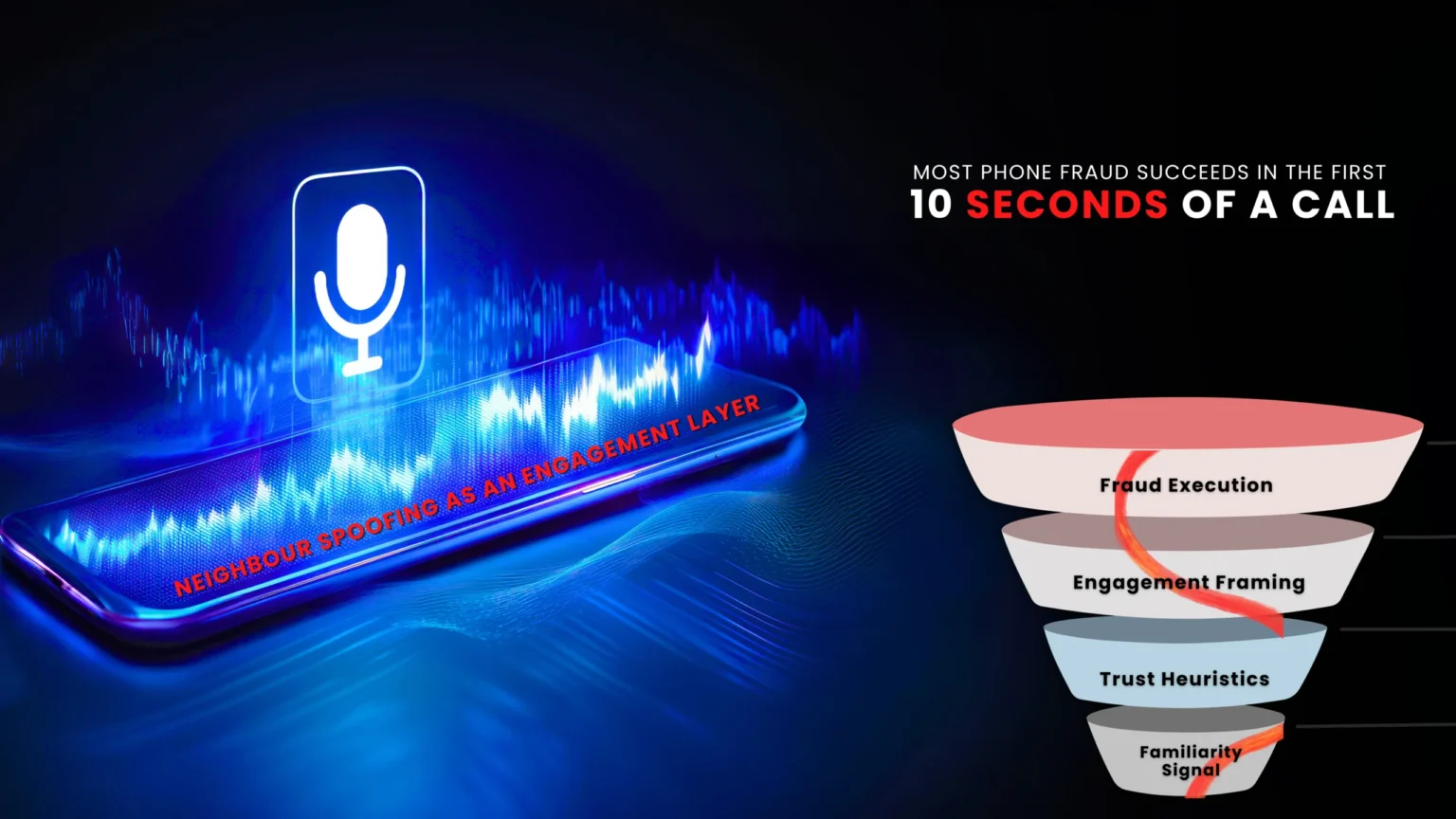
Neighbour Spoofing in Voice Fraud: How Phone Scams Exploit Caller Trust